
Egypt and South Africa have started moving rapidly towards creating a common industrial partnership in terms of automotive manufacturing, automotive parts, logistics facilities, pharmaceuticals, and metal manufacturing. The economic strategy is meant to capitalize on the strengths that both regions share, to increase the assembly lines within the region, and to open up the trade channels in Africa.
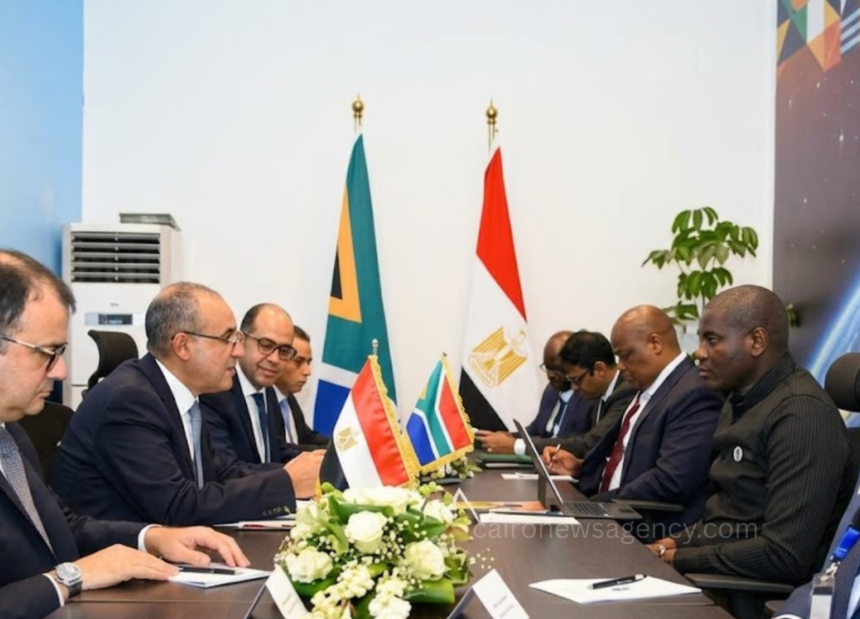
The joint strategy was agreed upon after meetings between the Egyptian Minister of Industry, Khaled Hashem, and the South African Minister of Trade, Industry and Competition, Mabo Parks Tau. Both countries have capitalized on the momentum created at the African Automotive Investment Forum in El Alamein to position themselves as industrial hubs. Egypt is actively soliciting global automakers and parts manufacturers to build facilities within its borders, targeting local vehicle consumption alongside broader export markets across Africa and Europe.
A cornerstone of the initiative centers on localized production of specialized vehicle components, including commercial tires and electric vehicle battery units. To eliminate cross-border trade friction, officials are working to establish standardized vehicle testing and safety certification protocols. Beyond finished vehicles, the partnership envisions joint ventures in raw material processing, specifically iron, steel, and manganese alloys essential for heavy industrial manufacturing.
Commercial momentum is already underway through private-sector agreements. Egypt’s ElAraby Group recently partnered with South Africa’s Malben Engineering to build a dedicated industrial platform for vehicle component manufacturing. Additionally, both nations officially established the Egyptian-South African Business Council to accelerate direct private investment. These measures align with regional trade framework priorities to boost intra-African value chains and optimize local supply capacity.
Furthermore, this cross-continental collaboration highlights growing institutional efforts to capitalize on the African Continental Free Trade Area (AfCFTA). By lowering tariff barriers and synchronizing industrial standards, Cairo and Pretoria intend to reduce continent-wide reliance on external imports, secure resilient supply networks, and position the continent as a competitive global exporter of advanced industrial goods.