

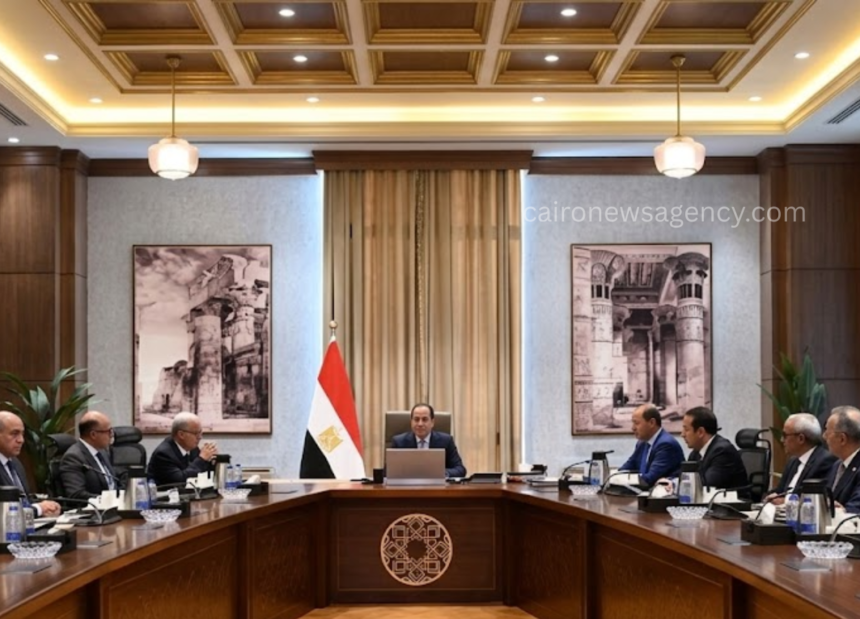
The Egyptian Government Cabinet officially supports a policy that includes plans for managing public resources and expanding private sector participation in critical national industries until the year 2030. Egypt Private Sector Growth
The plan reflects the second version of the State Ownership Policy of Egypt. Under the direction of Prime Minister Mostafa Madbouly, the cabinet discussed the plan and decided to include all comments from the cabinet in its final version. The plan aims at structural reforms through specific metrics, responsibilities, and implementation schedules.
The core of the structural reform process in Egypt lies in Law No. 170 of 2025, which provides the legal architecture governing state enterprise ownership. The legislation mandates enhanced corporate governance, greater transparency, and institutional oversight for commercial entities fully or partially held by the government.

To construct the operational roadmap, Egyptian policymakers conducted extensive consultations with major multilateral development partners, including the International Monetary Fund, World Bank Group, European Commission, and the Organisation for Economic Co-operation and Development. In addition, regional and international investment banks contributed insight to align public asset management with global best practices, foster competitive neutrality, and stimulate a stable commercial climate.
The updated policy explicitly shifts the government’s role from directly managing enterprise assets to acting as an enabler and neutral market regulator. By establishing clear rules on state disinvestments and enterprise affiliations, the reforms aim to boost investor confidence, streamline public debt management, and attract foreign direct investment into high-priority economic sectors.
The action plan spans nine strategic pillars, encompassing 31 core programs divided into approximately 100 individual operational measures. Each component sets out clear targets, key performance indicators, and assigned government authorities to ensure rigorous monitoring. Serving as a primary reference framework, the policy establishes clear boundaries for state involvement while opening up expanding investment avenues for private market participants over the coming four years. Cairo News Agency