
President El-Sisi has warned strongly of any attempt to try a fait accompli in regard to the water security of the region and stated that there should be no upstream countries claiming full control over transboundary waters.
As he said while opening the ninth conference, Cairo Water Week, the country’s head of state pointed out that his country depends very much on the Nile River for providing over 98% of its renewable water resources. Thus, the issue of protecting those resources is of vital importance to Egypt.
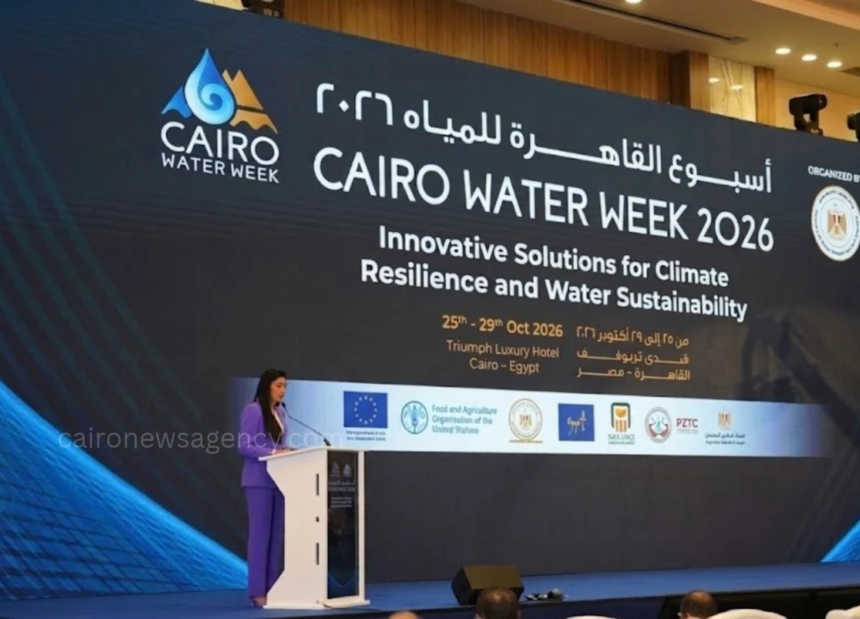
The event lasts five days, from October 25 to October 29, under the general theme “Water as a catalyst for peace, shared prosperity, and a sustainable planet,” and brings together various international delegates, specialists, and many ministerial representatives. According to official reports from the Irrigation Ministry, the event features 137 specialized sessions alongside technical discussions for the Arab Ministerial Water Council, focusing on climate resilience, sustainable resource management, and regional cooperation ahead of the upcoming United Nations Water Conference.

Furthermore, discussions during the ongoing conference extend beyond political friction, addressing critical technological advancements and financing frameworks needed to combat escalating environmental pressures. Experts and regional representatives are actively reviewing innovative desalination techniques, advanced wastewater treatment strategies, and smart agricultural practices designed to optimize water efficiency. These collaborative initiatives underline a broader regional commitment to transforming environmental scarcity into sustainable opportunities through advanced science, cross-border investments, and shared technological expertise.
El-Sisi noted that while Cairo remains fully committed to collaborative development partnerships across the Nile Basin and supports equitable growth, unilateral control and the absence of prior notification undermine stability. He reiterated that natural geography does not grant sole ownership over shared lifelines, urging international stakeholders to transition from crisis management to practical implementation, capacity building, and lawful resource sharing.
Ultimately, officials emphasized that robust multilateral cooperation and strict adherence to international legal frameworks remain indispensable for safeguarding long-term regional stability, ensuring that shared rivers foster enduring peace and sustainable prosperity for all interconnected downstream and upstream populations.