
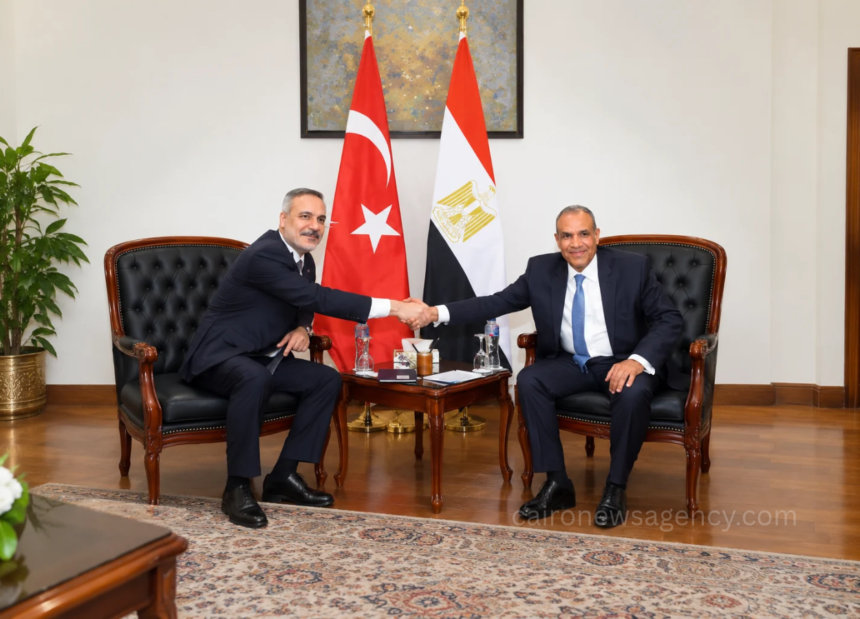
High-level talks were held between Egypt’s Foreign Minister, Badr Abdelatty, and Turkey’s Foreign Minister, Hakan Fidan, regarding worsening security situations in the Middle East region and increasing chances of military confrontation.
In the telephone discussion, the two ministers discussed the strategy of cooperation for reducing tensions in the region. The discussion highlighted the commitment of both nations to avoid more tension in the region by engaging in effective coordination through diplomatic channels as well as multilateral structures.
This discussion is one of the many aspects of the strategic alignment between Cairo and Ankara. Both ministers analysed the cooperative strategies linked to the R4 ministerial group. This framework seeks to harmonize regional stabilization approaches as persistent hostilities threaten vital international trade arteries and maritime corridors.
Amid alternating cycles of military escalation and brief lulls in various regional flashpoints, Abdelatty emphasized the critical necessity for unified international action. He noted that priority must be given to immediate calm, diplomatic restraint, and the resumption of political dialogue to insulate neighboring states from cascading crises.
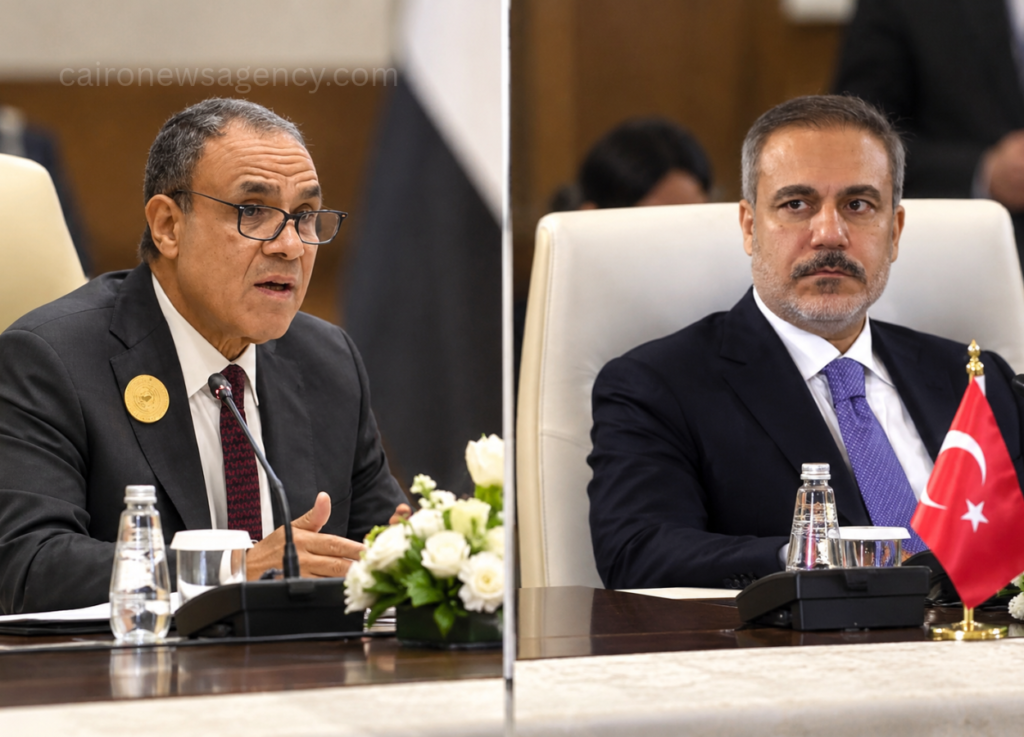
The conversation directly follows recent multilateral talks held in Istanbul, where foreign ministers from the R4 bloc issued a joint appeal for uninterrupted humanitarian access to the Gaza Strip, reinforced protection for vital commercial shipping lanes in the Red Sea, and permanent ceasefires across active conflict zones.
Furthermore, both foreign ministers acknowledged that failure to contain current volatility risks triggering broader economic fallout for the entire Eastern Mediterranean and North African zones. Beyond security considerations, maintaining stable diplomatic channels between major regional powers remains essential to protecting global energy supply chains, commercial maritime navigation, and long-term socio-economic resilience across neighboring Arab and Mediterranean nations.
Both top diplomats agreed to maintain open channels of communication and sustain continuous consultations. Their joint efforts aim to preempt severe geopolitical shocks, safeguard regional security architecture, and encourage sustainable diplomatic resolutions to long-standing Middle Eastern disputes.